2 detection techniques that split behavioral analysis
6 common evasion techniques attackers use to evade static detection
6 core steps that build a behavioral detection pipeline
Attackers can swap a file hash in seconds and rotate a command-and-control domain overnight. But what they can’t do is skip the actions the attack actually depends on. Every campaign still has to execute code, move through a system, and communicate with infrastructure somewhere. None of that disappears just because the file signature changed. Behavior-based detection is built around that constant instead of one that keeps changing.
Below, we cover how behavioral detection works, why it beats signature-based methods against modern threats, and how to implement it more effectively in your organization.
What Is Behavior-Based Detection?
Behavior-based detection identifies threats by watching what a process, account, or system actually does while it runs, rather than trusting what it was configured or expected to do. This behavior gets pieced together from several sources at once, including process execution, API calls, memory activity, and authentication events.
A single action from any of those sources rarely reveals much by itself, since most individual steps look ordinary in isolation. The threat shows up in the sequence those actions form together — a legitimate process would never carry out that same chain of steps in that order.

Behavior-Based Detection’s Place in Security Operations
Malware analysis sandboxes watch a sample execute and record every move. EDR and XDR platforms build rules around suspicious endpoint activity. Meanwhile, SIEM and UEBA tools correlate user behavior and entity behavior across log sources, catching what no single event reveals. The same logic carries into the cloud, where these platforms watch for account abuse and over-permissioned identities. And once static indicators run dry, threat hunting teams have behavioral evidence to fall back on.
Key insight: No single behavioral detection platform catches everything. Sandboxes focus on malware execution, EDR tracks endpoint activity, SIEM correlates events across infrastructure, and UEBA detects account abuse. The strongest security programs layer them together.
Predefined Detection vs. Anomaly Detection
Behavior-based detection splits into two techniques:
- Predefined behavioral detection hunts known-bad sequences, like a process spawning a command shell and immediately reaching out to an external IP.
- Anomaly detection works from the other direction by building a behavioral baseline of normal behavior for a user, system, or account and then flagging whatever departs from it.
This second technique sits within insider threat detection, where there’s often no malware in the picture at all. User behavior analytics and entity behavior analytics platforms exist for exactly that problem.
Behavior-Based Detection vs. Signature-Based Detection
Signature-based detection matches known attributes, including file hashes, byte patterns, flagged domains, filenames, and predefined signatures. It’s fast, cheap to run, and reliable against anything already catalogued.
Behavioral detection asks a different question, looking at what a file, process, account, or system actually does over time. A file with a brand-new hash can still trigger it, as long as the file behaves like ransomware — injecting into other processes, encrypting in bulk, or wiping shadow copies.
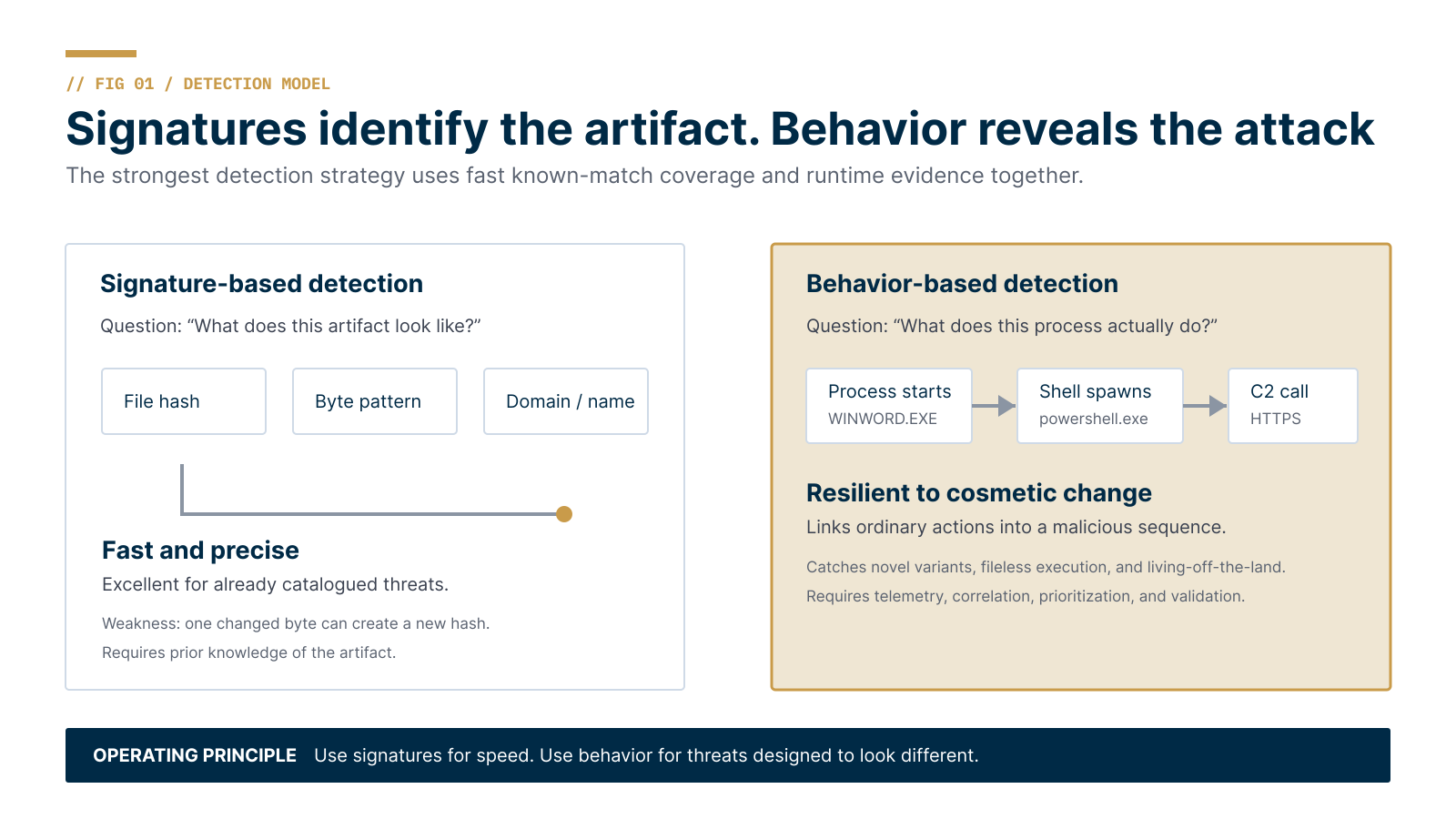
A decade ago, detection tools ran almost entirely on signature databases, which are refreshed constantly to keep pace with new malware. However, that model assumes somebody has already catalogued the attack. Attackers now generate variants faster than any database updates, so modern endpoint protection layers behavioral engines on top of signature matching.
Why Modern Threats Require Behavior-Based Detection
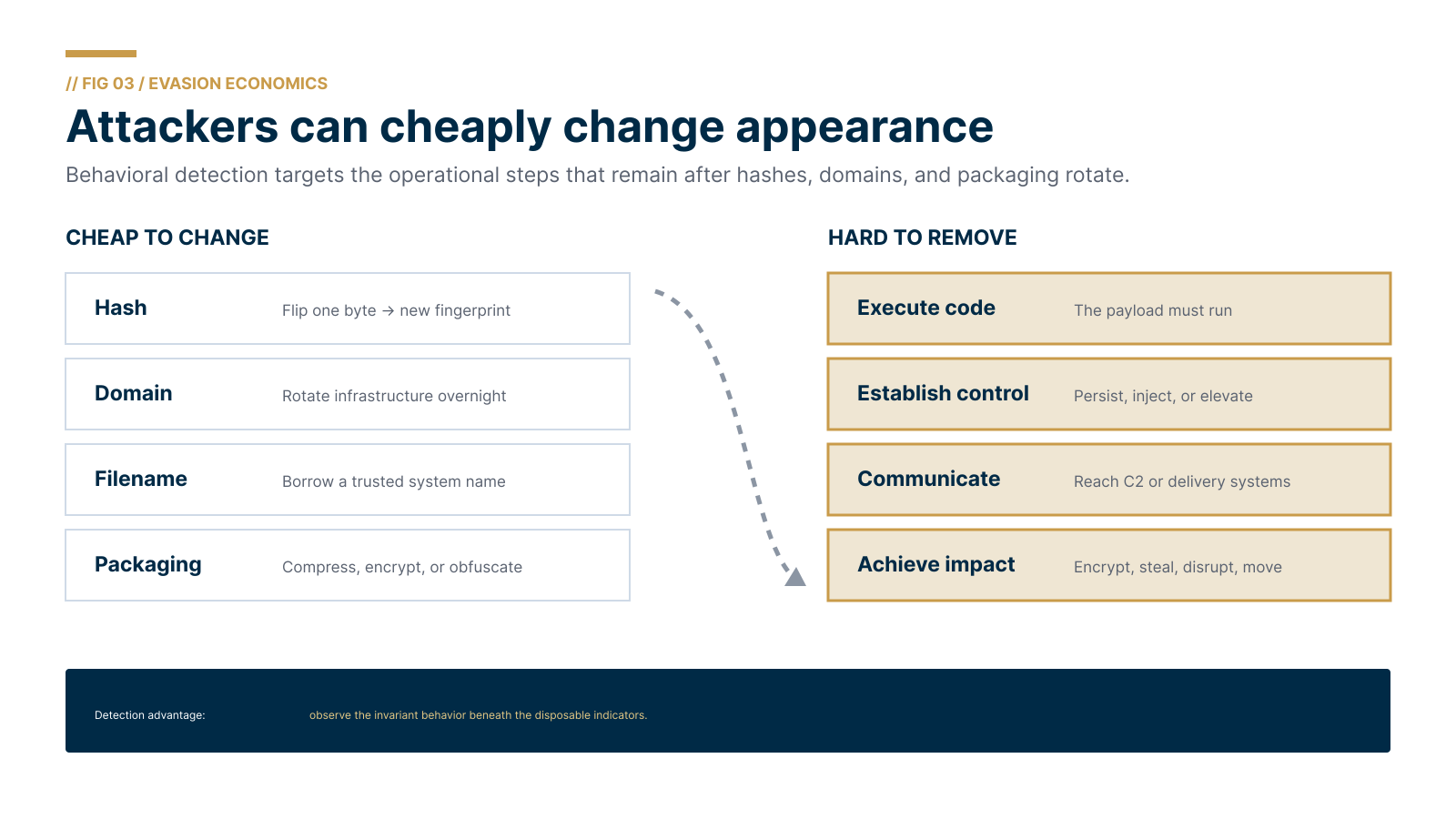
Two forces push teams toward behavioral methods. Attackers have made static indicators trivially cheap to change, and an entire class of threats now leaves almost no static artifacts behind. The common evasion techniques include:
- Recompiling malware to alter binary structure enough to slip past existing signatures. The logic stays the same while the compiled output changes, so a detection tuned to the old build finds nothing.
- Changing hashes so hash-based matching finds nothing. Flipping a single byte produces a completely different fingerprint, which makes hash blocklists obsolete almost as fast as they’re published.
- Rotating domains to dodge blocklists and reputation checks. Automated infrastructure cycles through hundreds of fresh domains a week, outpacing reputation scoring that needs a domain to have some history.
- Renaming files to sidestep simple filename rules. Attackers often borrow names from legitimate system binaries, which also makes the file look unremarkable in a process list.
- Packing payloads behind compression, encryption, or packing tools. The malicious code only appears in memory at runtime, so static scanners inspect a wrapper that reveals nothing.
- Modifying infrastructure including servers, IPs, hosting providers, and delivery mechanisms. Moving to a reputable cloud provider works especially well, since blocking that IP range would take down legitimate services too.
Every one of these leaves the behavior aspect untouched. A repacked sample still has to execute, establish persistence, and reach outward or move laterally. Recompiling changes what a file looks like on disk without touching a single action the attack depends on — and that mismatch is why signatures often can’t keep up.
The Threats That Break Static Detection
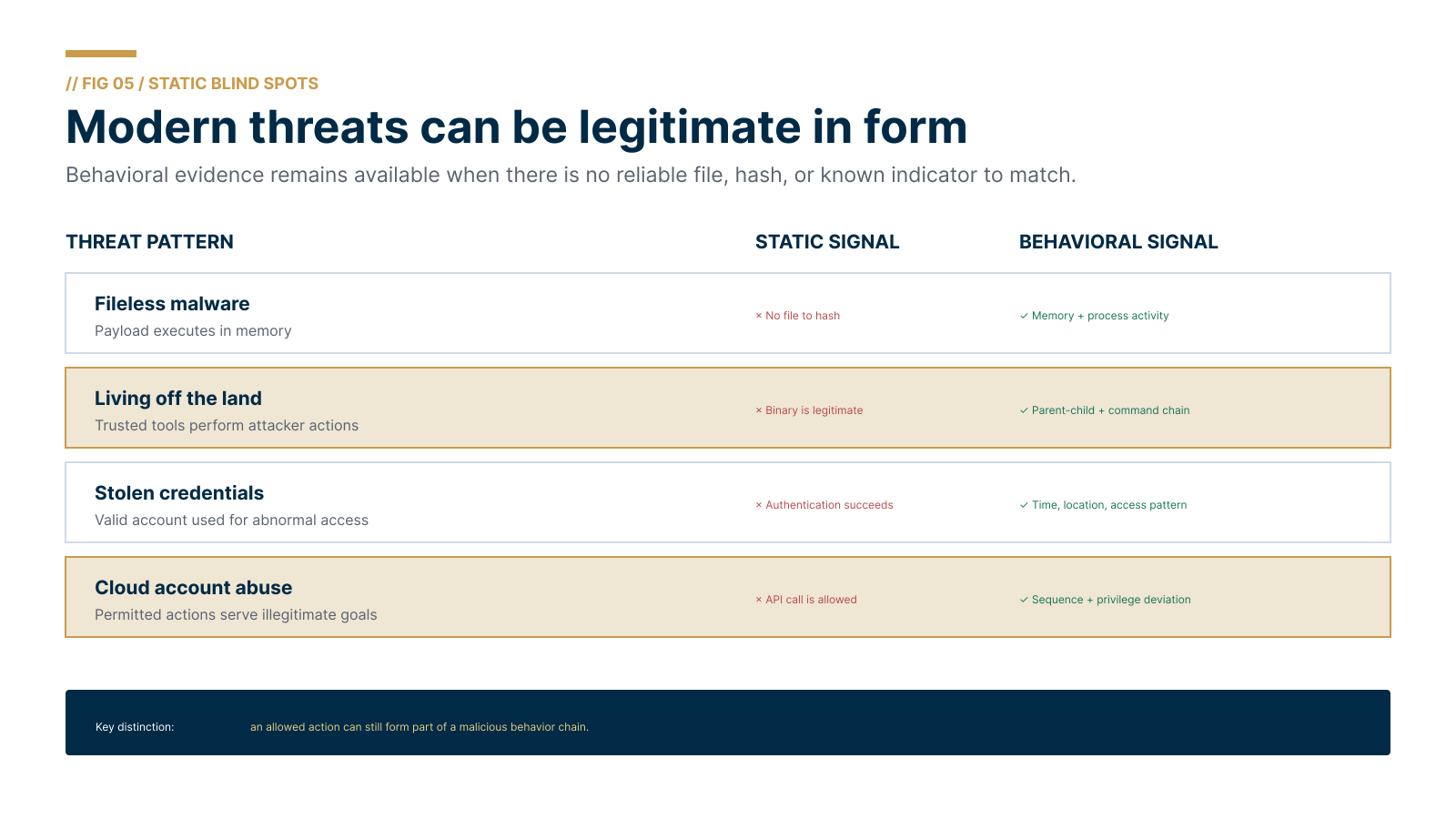
The cases giving security teams the most trouble barely touch the disk. Fileless malware and memory-resident payloads never produce a file to hash. Living-off-the-land activity abuses tools already installed, so nothing about the tool looks odd. Stolen credentials, credential theft, lateral movement, and cloud account abuse all run on legitimate access pointed at illegitimate ends.
With behavioral evidence, teams can still catch them. Odd login hours, abnormal behavior around data access, or a service account suddenly running interactive commands can surface suspicious activity with no known signature and no reliable indicator of compromise in sight.
How Does Behavior-Based Detection Work?
Raw activity becomes a usable detection signal through a repeatable series of steps. The process below helps narrow down a flood of raw events to the handful that’s actually worth an analyst’s time:
- Collect security telemetry. Pull from endpoints, network traffic, identity systems, cloud platforms, applications, and malware analysis tools.
- Analyze individual events. Check each action for suspicious characteristics or departure from expected behavior.
- Correlate related behaviors. Link events across users, systems, and time windows to reconstruct possible attack sequences.
- Apply detection logic. Score risk with behavioral rules, statistical models, or machine learning algorithms.
- Generate and prioritize alerts. Rank findings by severity, confidence, and likely impact so analysts aren’t drowning in noise.
- Validate and respond. Decide whether activity is malicious, legitimate, or merely unusual, then act.
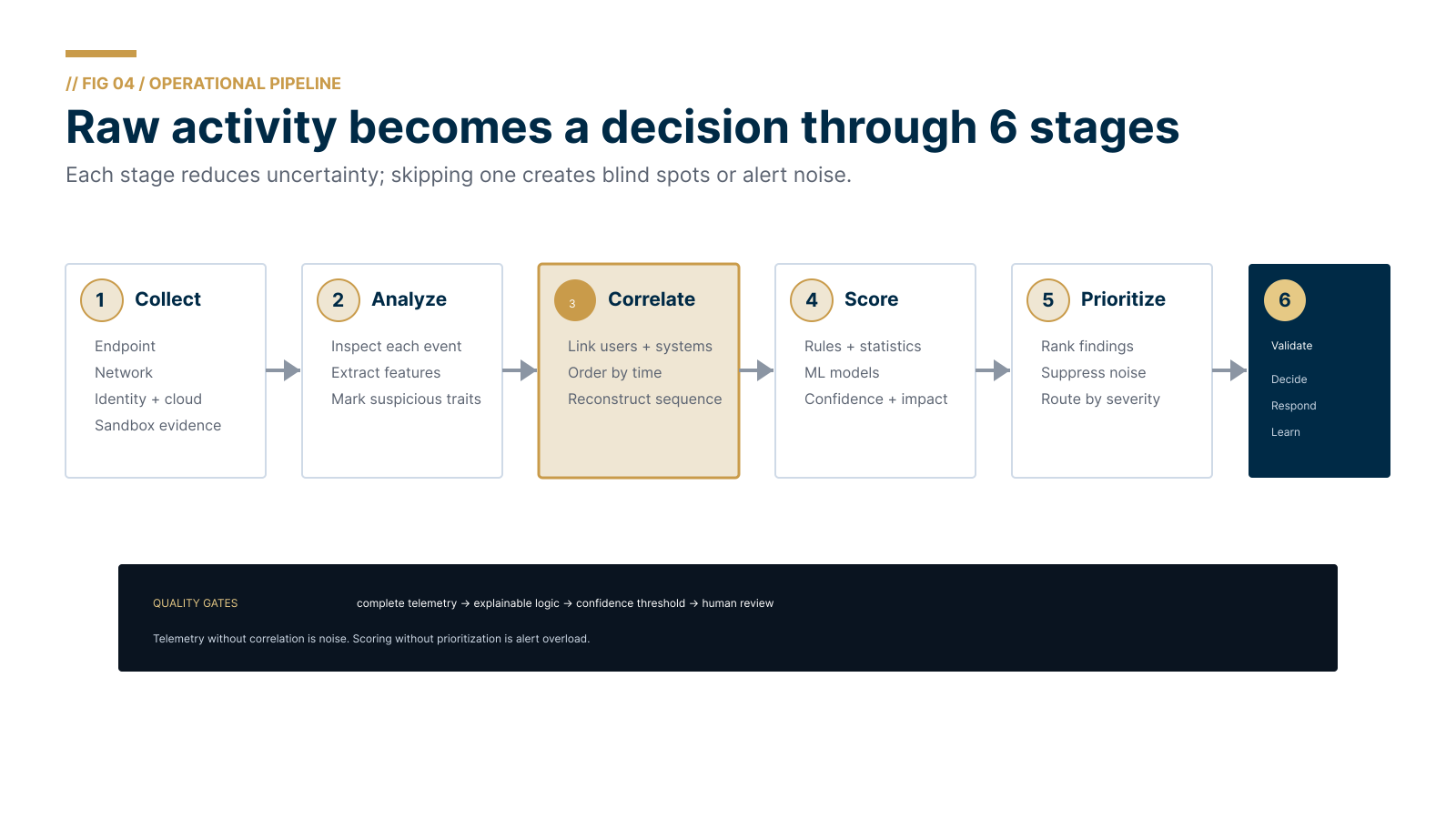
If you skip even one stage, the whole pipeline gets disrupted. For example, telemetry on its own is just a pile of disconnected events, and detection logic without prioritization buries real threats under false positives. Evaluated alone, none of them looks alarming — which is why behavior-based threat detection only pays off when the full process runs consistently.
What Role Do AI and Machine Learning Play in Behavior-Based Detection?
Artificial intelligence has become central to analyzing behavioral data at the volume modern environments produce. AI-powered behavioral analysis outperforms manual review at dynamic baselining, anomaly scoring, sequence analysis, alert clustering, enrichment, and risk prioritization. Similarly, machine learning spots relationships in telemetry sets far too large for line-by-line inspection, and it keeps working around the clock rather than on a review schedule.
A mid-sized organization produces more authentication events, process launches, and network connections in a day than any team can inspect by hand. With behavioral analytics driven by machine learning, it’s easier to triage that flood, which spares teams from either reviewing everything or reviewing nothing.
The Limits of AI-Assisted Detection
Human judgment doesn’t become optional, though. Every model carries assumptions that decay over time, and a detection program that ignores them inherits blind spots. Four constraints shape where AI-assisted detection earns trust:
- Model drift. Threat patterns evolve and normal activity shifts as an organization changes, so a model tuned to last year’s environment slowly loses accuracy. The decline is gradual, which makes it easy to miss.
- Opaque scoring. A risk score arrives without much explanation of what drove it, leaving analysts guessing which signals mattered. That guesswork slows triage on the alerts that deserve speed.
- Biased training data. Incomplete or unrepresentative data produces confident results that don’t survive contact with reality. A model trained on one kind of environment misjudges behavior it never saw.
- Limited explainability. Much of the tooling can’t show its work, so validating a detection decision gets difficult. Regulated industries feel this hardest, since “the model said so” rarely satisfies an auditor.
Keeping a human in the loop helps address these gaps. Analysts should review high-impact findings before any consequential response fires, and they need enough visibility into a model’s reasoning to judge why it flagged a specific behavior. AI multiplies what a team can cover, with human judgment catching what a model gets wrong.
How Can Security Teams Implement Behavior-Based Detection Effectively?
Switching on a feature isn’t an implementation. The difference between a program that catches real threats and one that only generates alerts comes down to disciplined operational habits. These best practices cover what matters most:
- Stay updated with threat intelligence. Current threat data reveals emerging behaviors before they reach your environment.
- Gather and refine requirements. Decide which threats, assets, and activities your detections must cover before building anything.
- Develop and test detections. Validate detection logic against real or simulated malicious activity, never theory alone.
- Balance precision with breadth. Cover a wide range of behavioral threats without burying analysts in false positives. Reducing false positives is as critical as catching threats.
- Deploy and monitor. Roll out deliberately, then track accuracy and performance through ongoing monitoring.
- Adapt to risk tolerance. Set alert thresholds against your organization’s priorities and acceptable risk.
- Re-evaluate continuously. Threats shift, systems shift, user behavior shifts. Detections have to follow. This is not a one-time project.
Behavioral baselines move as an organization grows, adopts new tools, or changes how people work. Detections that were tuned well a year ago start missing things when nobody revisits them.
How Does VMRay Support Behavior-Based Detection?
VMRay observes suspicious samples at the hypervisor level, which means it captures runtime activity without installing agents or hooks inside the guest that malware can spot and evade. Analysts get visibility into API calls and process activity alongside memory artifacts and command-and-control communication that build out a full forensic timeline. That’s the difference between a report an analyst can trust and one that’s been staged.
Malware that detects a sandbox behaves itself long enough to produce a clean result, and teams relying on it end up making decisions on data the sample chose to show them. VMRay never gives it that choice, so what lands in front of an analyst is what the sample would actually do to a real target. This detection engineering foundation helps security teams build reliable behavioral rules that catch real attacks without the noise.

Detect What Threats Do, Not Just What They Look Like
Attackers can evade static detection by changing hashes, rotating domains, or repackaging payloads without significantly altering how the malware operates. Because the underlying actions required to execute an attack are harder to change, behavioral security provides a more reliable way to identify threats.
Signature-based tools still have an important role, but they can’t support a modern security strategy on their own. When teams combine them with behavioral detection built on real runtime intelligence, they have a better chance of identifying threats before they cause damage.
VMRay provides that intelligence by showing how malware and malicious activity behave during execution. For teams that are still relying heavily on static indicators, behavioral analysis adds deeper context and stronger evidence to support detection and response.
Detect Threats by What They Do, Not Just What They Look Like
Signature-based detection alone can’t keep pace with modern threats. Build a behavioral detection program that catches evasive malware, fileless attacks, and account abuse — with VMRay’s runtime analysis and detection engineering platform.